Alec—Boris Yvain
The King in YellowAlec—Boris Yvain is the central friendship of the young artists’ circle: a relationship founded on shared artistic life, strengthened by mutual recognition, and finally transformed by unspoken love, sacrifice, and catastrophe. Alec and Boris claim one another as fellow Americans in the Beaux Arts world, yet their intimacy is tested when Geneviève’s hidden love for Alec is revealed and Boris responds not with accusation but with compassion. Boris’s death leaves Alec not merely bereaved but morally bound to understand and preserve the meaning of their friendship.
Identity and Foundation
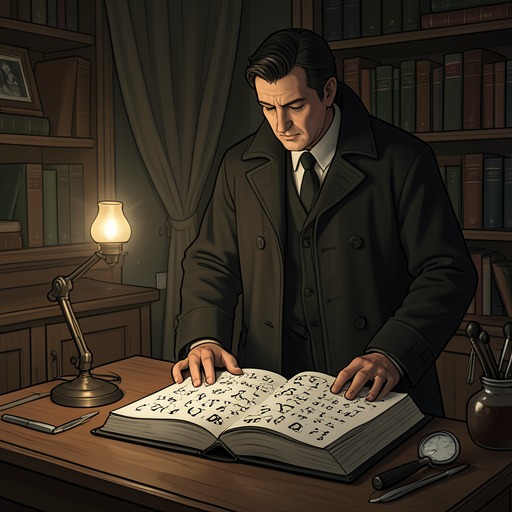
Alec and Boris Yvain belong to the same close artistic world, where friendship is expressed through work, studio life, familiarity, and chosen allegiance. Boris is a sculptor, and Alec is sufficiently close to him to sit beside him in his studio while Boris works on the unfinished group of the "Fates," twirling a sculptor’s chisel and scrutinizing the marble. The setting makes their friendship practical as well as emotional: Alec is not an outside admirer but a trusted companion admitted into Boris’s working space and intellectual preoccupations.
Their bond is also framed as a matter of collective pride. Alec and Jack Scott claim Boris, and Boris claims them, because he was born in America even though his father was French and his mother Russian. Within the Beaux Arts, everyone calls him Boris, but only Jack Scott and Alec receive the same familiar form of address from him. This distinction marks the friendship as unusually intimate. Boris’s public identity is that of a promising sculptor, while his private identity is defined by the two companions whom he treats as equals and near-family.
Artistic Companionship
The friendship is nourished by shared judgment about art. Boris has completed an academic Ariadne and expects to send it to the Salon, yet he feels embarrassed because the marble is less ambitious than the work he has begun. The earlier success of the Madonna, for which Geneviève sat, has raised expectations around him. Alec agrees that the Ariadne is technically magnificent but that the world should expect something better, and both understand that the terrible, half-shrouded Fates cannot be completed in time. Their conversation therefore joins affection to exacting criticism: Alec does not flatter Boris, and Boris trusts him enough to expose his dissatisfaction.
Boris’s studio also becomes the place where artistic experimentation crosses into dangerous investigation. He tests a solution on a goldfish, whose body becomes rigid and sinks before a marble form emerges from the liquid, and Jack Scott later insists on trying the experiment on a white rabbit. Alec refuses to watch the rabbit die, although he accepts that Boris needs distraction from his cares. The episode reveals a tension within the friendship: Alec remains emotionally attached to Boris while recoiling from the methods through which Boris pursues his discovery. Their shared artistic world can contain tenderness and play, but it also shelters an experiment that turns living creatures into marble and ultimately becomes inseparable from death.
Love, Disclosure, and Loyalty
Alec’s love for Geneviève complicates the friendship long before either man speaks openly about it. Geneviève had previously told Alec that she loved him but thought she loved Boris best. After that declaration, Alec went to Boris’s house and congratulated him. The interview was perfectly cordial, yet neither man was deceived by the surface politeness. Alec believed that the meeting comforted at least one of them, and he also believed that Boris understood the pain concealed beneath his congratulation. The friendship thus depends on an ethic of restraint: Alec does not challenge Boris, and Boris does not force Alec to confess what both already know.
Their intimacy is publicly maintained in the domestic ease of Geneviève’s household. When she returns from an illness of mood and takes Alec’s arm, she places her other arm through Boris’s and tells Alec that, after Boris, there is no one in the world whom she likes as well as him. The three then race arm-in-arm into the dining-room, scandalizing the servants. The scene presents the friendship as a living triangle in which affection, rivalry, and social performance briefly coexist. Their ages—Geneviève eighteen, Boris twenty-three, and Alec not quite twenty-one—emphasize the youthful confidence of this closeness, even as the emotional conflict beneath it is already severe.
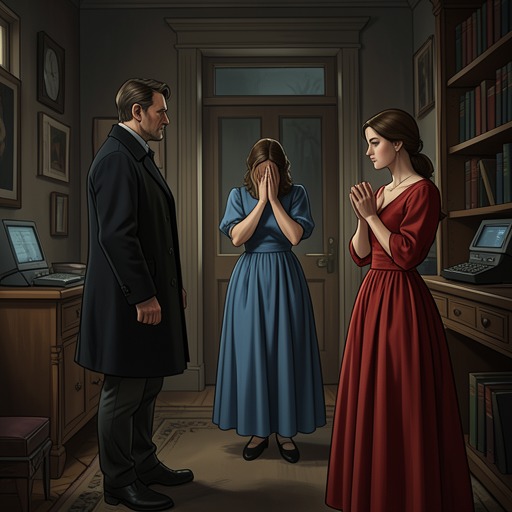
The decisive rupture comes when Geneviève falls into fever. Sitting upright with crimson cheeks and glittering eyes, she babbles while Boris tries gently to restrain her. Alec is called to help; at his touch she briefly sinks back, then opens her eyes and looks directly at Boris while revealing the secret grief she has carried. She speaks Alec’s name. For Alec, the revelation is an agony of shame and sorrow because it exposes what he has tried to keep loyal and silent. He cannot silence her and cannot look at Boris. Boris, turning to him with a bloodless face, tells him that it is not his fault if she loves him. He cannot finish the thought before the doctor enters.
This response is the clearest expression of Boris’s friendship. He does not convert Geneviève’s confession into accusation, nor does he treat Alec as a conscious betrayer. His attempt to console Alec acknowledges both the legitimacy of Geneviève’s love and the innocence of the friend who has received it. Yet compassion cannot prevent the old bond from changing. Alec understands that the three lives have entered new channels: the previous arrangement has snapped, and a new bond has been forged through the painful knowledge Geneviève has disclosed.
Separation and Death
Alec’s illness follows the revelation, bringing to the surface the strain he had endured for two years. He had imagined himself tranquil, returning each morning to Geneviève and Boris with a heart apparently cleansed by the storms of the night, but the fever and collapse show that the conflict had exceeded his capacity to contain it. While recovering, he asks only for Boris. He expects that friendship can be resumed without rancour, cowardice, or mistrust; afterward, he plans to disappear from Boris and Geneviève’s lives without pretext or explanation. His intended withdrawal is conceived as an act of loyalty, a way to spare them and preserve the dignity of the relationship.
Alec never gets the opportunity to carry out that plan. When he finally asks for Boris and sends his dearest greeting to Geneviève, Jack Scott tells him that both are dead. The news drives him into a violent rage and relapse. His grief is not simply romantic disappointment; it is the collapse of the future in which he and Boris were to meet again, recognize one another without hostility, and part deliberately. Boris’s death deprives Alec of the final conversation through which their friendship might have been consciously redefined.
Jack’s later account gives Boris’s death a final, enigmatic artistic form. On the day Alec is left in the doctor’s care, Jack returns to find Boris working on the Fates while Geneviève sleeps under drugs. The third figure, looking straight ahead over the world, bears Boris’s face—not the face Jack had known, but the face Boris wore then and would wear to the end. Boris continues working in silence until nearly midnight. When Geneviève is found at the bottom of the pool with her hands across her breast, Boris shoots himself through the heart.
The account makes Alec’s friendship with Boris extend beyond ordinary memory into the unfinished sculpture itself. The Fates preserve Boris’s face at the moment when his private world has become impossible, turning the work into a posthumous record of knowledge, grief, and impending death. Alec never sees Boris complete the group, but the description gives the sculpture the role of a final message that Boris cannot verbally deliver.
Meaning and Aftermath
Boris’s friendship with Alec is defined by a paradox: it is strongest where speech is most limited. Their affection is evident in familiar address, shared artistic criticism, domestic intimacy, and Boris’s attempt to comfort Alec, yet the most consequential matters—Alec’s love, Boris’s knowledge of it, and the decision each might have made afterward—remain largely unspoken. Their relationship therefore depends on recognition without resolution. Each man understands more than he says, and that silence is both a form of loyalty and a condition of tragedy.
The friendship also contrasts humane attachment with Boris’s destructive pursuit of petrification. Alec can enter Boris’s imaginative and artistic world, but he recoils from the transformation of living creatures into marble. After Boris and Geneviève die, Jack destroys the laboratory evidence, empties the solution, burns Boris’s papers and notebooks, smashes the bottles, and removes every trace that might help recover the formula. Boris’s work is consequently remembered through the Fates rather than through the scientific discovery that consumed him. Alec’s relation to Boris survives as mourning and moral interpretation, while the material means of Boris’s final obsession are deliberately erased.
In the end, Alec—Boris Yvain is not a friendship that triumphs over rivalry, but one that refuses to become rivalry even when love makes rivalry possible. Alec’s intended disappearance, Boris’s refusal to blame him, and the later image of Boris’s face in the Fates all show a bond attempting to preserve the other at the cost of the self. Its tragedy lies in the fact that this mutual consideration never becomes a shared, living decision: illness, silence, and death intervene before the friends can meet again.